
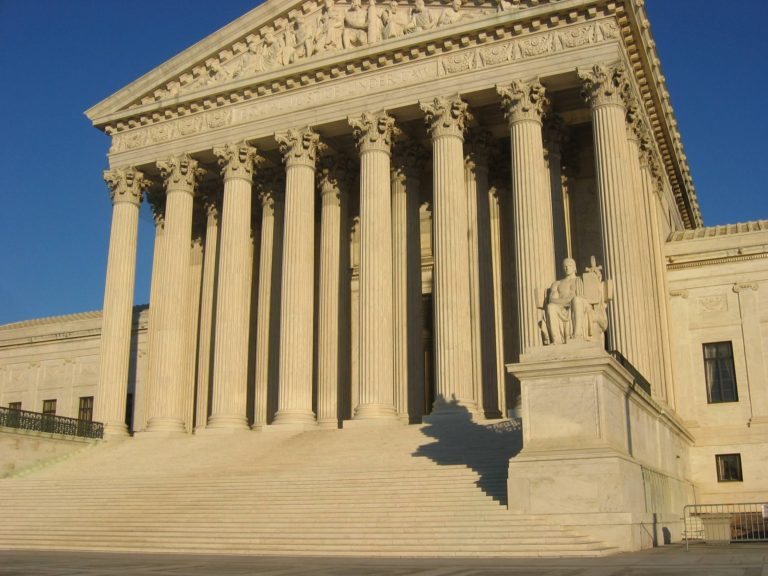
最高法院裁定,在2020年4月23日星期四,在6-3号决定中,清洁水法(CWA)可以通过地下水将废物的间接排放废物排放到联邦监管河流和海洋(水域)。CWA的要求具有长调节点源通过国家污染物排放消除系统排放到表面水域(NPDES.)允许计划。地下水从未被认为是美国(WOTUS)的联邦水,并通过各自的国家处置系统(SDS)许可证来省去地下水到地下水排放(GWSD)。
法院汇总了毛伊县六县夏威夷野生动物基金,18-260号,污染物间接通过地下水间接行驶的是直接放电的“功能等同物”。毛伊县拥有并在拉海纳污水回收设施中拥有四台注射井,井每天排放约3-500万加仑治疗的废水。废水沿着地下水乘坐地下水到太平洋旅行。原告认为,该县应该有一个NPDES允许排放到Wotus(即太平洋)。
The Clean Water Act requires “point sources” of pollution to obtain permits for “any addition of any pollutant to navigable waters” and a failure to do so can result in daily fines of more than $50,000. Waste generators must have an NPDES permit from the issuing Agency ( in many cases the State Regulatory agency, but in some cases the US Environmental Protection Agency) when waste goes through a pipe from their source to a body of water (a point source). The Supreme Court decision affirmed that in certain circumstances, waste injected into underground wells may now be subject to federal CWA permitting. The Supreme Court articulated a qualitative standard under which NPDES permits will be necessary and remanded the case back to the 9TH.审理申请标准的上诉法院。
最高法院规定的标准表示,当对地下水的排放是“直接放电的功能等同物”时,需要CWA申请和NPDE允许。大多数法院舆论确定了确定“直接出院的功能等同物:”的七个因素
- “过境时间,”
- “旅行的距离,”
- “the nature of the material through which the pollutant travels,”
- “the extent to which the pollutant is diluted or chemically changed as it travels,”
- “污染物相对于离开点来源的污染物量的污染物的量,”
- “污染物进入通航水域的方式或区域的方式,”和
- “污染(此时)保持其特定身份的程度。”
The court noted that time and distance are probably the most important factors, but in certain circumstances, other factors may be more important. This ruling stopped short of declaring that groundwater is a “Water of the US,” but it did acknowledge a regulatory link between groundwater and surface water.
这不是第一个法院挑战,认为GSWDS需要NPDES许可证,并解决了Wotus的范围。在4中听到了类似的西装TH.Circuit Federal Court of Appeals in Virginia and in the Minnesota State Court of Appeals. This is an emerging issue, and future permitting decisions and court cases will look to the recent ruling by the Supreme Court for guidance. An area of active concern is the movement of pollutants through groundwater from coal ash settling ponds, mining tailings dams, and leachate from landfills. In many cases, there will not be injection wells as in the Hawaiian case that serve as clear point sources. For ponds, basins and landfills, the movement of pollutants through groundwater is more diffuse. Facility operators and regulators will have to consider the seven factors defined by the Supreme Court to ascertain if the movement of pollutants in groundwater to surface water is the “functional equivalent of a direct discharge.”
联系我们的环境顾问
For more information, please give us a call or click the link below to fill out our Contact Us form.